Web Forms
5 min read

Is your firm’s digital onboarding broken?

Overview

Simplify client onboarding with Web Forms

Digital onboarding is meant to make life easier. It promises faster starts, fewer delays and a smoother experience for clients and staff alike. Yet many firms quietly feel that something is not quite working. Clients get confused. Information arrives late or incomplete. Teams spend time fixing issues that should not exist. The process is digital in name, but it often remains fragmented in practice.

This does not usually mean a firm has chosen the wrong tools. More often, it means the onboarding journey has grown piece by piece rather than being designed as a single, joined-up experience.

A common sign of a broken onboarding process is repetition.

Clients are asked for the same information more than once, sometimes in different formats. They may complete a form, then receive a follow-up email asking for details they thought they had already provided. From the client’s perspective, this feels frustrating and inefficient. From the firm’s perspective, it creates extra work and uncertainty about which version of the information is correct.

Another warning sign is delay.

When onboarding relies on email attachments or manual forms, progress often depends on back-and-forth communication. A missing detail pauses the process. A misunderstood question leads to another email or call. Over time, these small pauses add up, slowing the start of a matter and increasing pressure on staff.

Digital onboarding can also feel broken when clients are unsure what is expected of them. Unclear questions or requests for information without context can leave people feeling overwhelmed. This is especially true for clients who are unfamiliar with legal processes. If onboarding feels difficult, confidence can drop before the relationship has properly begun.

How do Web Forms help?

Web Forms help address these issues by bringing structure and clarity back into the onboarding journey. Instead of relying on scattered documents or emails, clients are guided through a precise sequence of questions. Each step is presented in plain language, making it easier to understand what information is needed and why. Clients complete the form at their own pace, without pressure, resulting in better responses and fewer mistakes.

Web Forms provide a structured first step, capturing the correct information before a matter progresses any further.
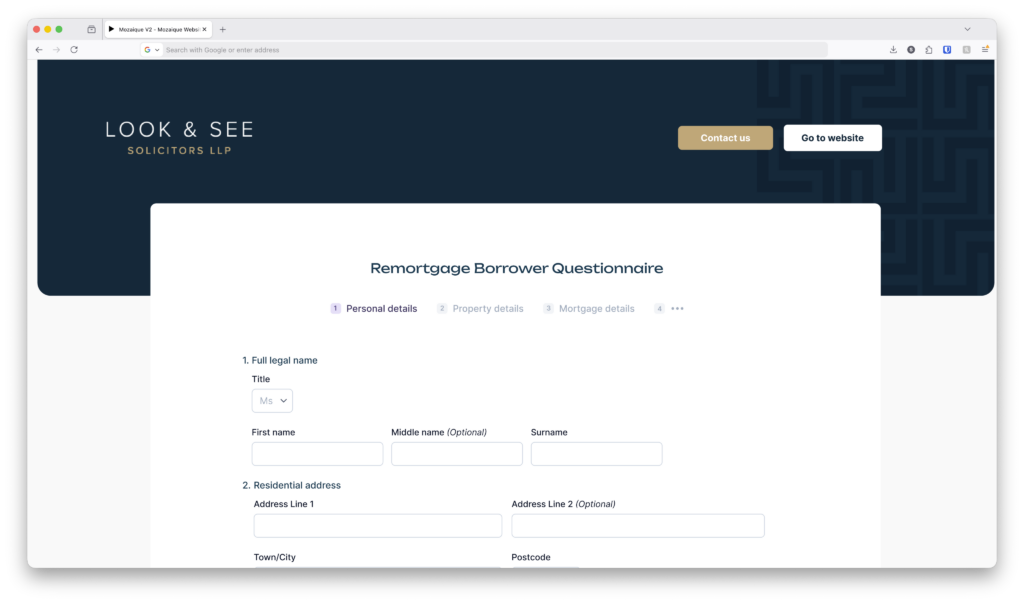
For firms, this creates a noticeable shift. Information arrives in a consistent format and feeds directly into the system. Teams spend less time interpreting responses or chasing missing details. Because the process is standardised, onboarding becomes more predictable, even during busy periods.
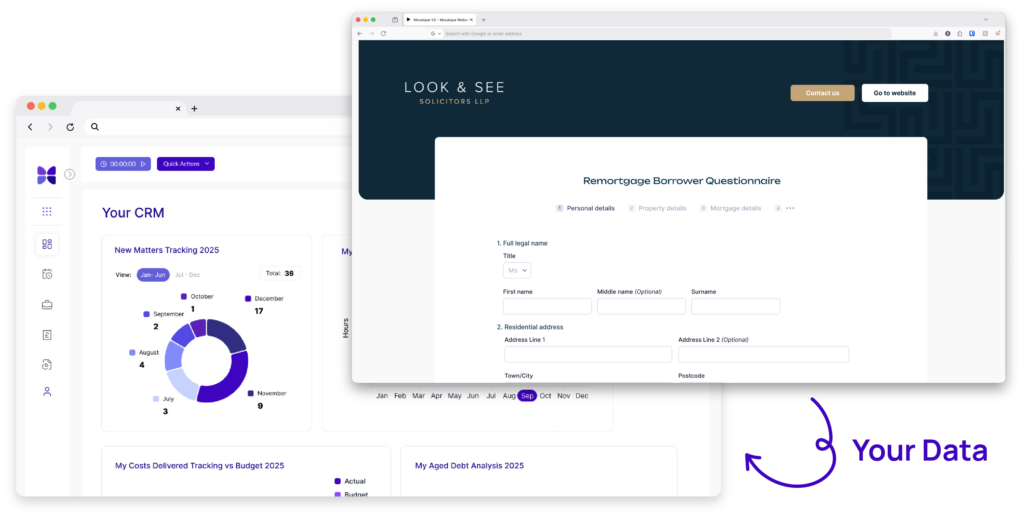
Web Forms also help restore confidence in digital onboarding. Clients feel supported rather than rushed. Staff trust the information they receive. Managers gain a clearer view of where onboarding is working well and where follow-up may be needed. The process starts to feel intentional rather than improvised.

A broken onboarding experience is not always obvious.

It often shows up in minor frustrations, repeated questions and quiet delays. By looking closely at how information is collected and shared, firms can identify where friction has crept in. Web Forms provide a practical way to remove that friction and replace it with a calmer, more reliable start to every new matter.

When onboarding is structured from the outset, firms spend less time correcting issues later in the process.

When onboarding works well, everything that follows becomes easier. Clients feel reassured. Teams feel organised. And the firm sets the right tone from the very first interaction.

FAQs

What does digital onboarding mean for a law firm?

Digital onboarding is the process of collecting client information electronically at the start of a matter, rather than relying on paper forms or email attachments.

How can a firm tell if its onboarding process is not working well?

Common signs include repeated requests for information, delays caused by missing details, and clients feeling unsure about what is expected of them.

How do Web Forms help improve digital onboarding?

Web Forms guide clients through questions one step at a time, using clear language and a structured flow that makes the process easier to complete.

Do Web Forms reduce delays at the start of a matter?

Yes. When information is collected clearly and completely at the outset, firms spend less time chasing missing details.

Can Web Forms reduce repeated data entry?

They can. Information entered by the client feeds directly into the system, reducing duplication and manual re-keying.

Are Web Forms suitable for less tech-confident clients?

Yes. The guided format and plain language make them accessible for clients with different levels of digital confidence.

How do Web Forms help staff?

They reduce interruptions, improve data quality, and allow staff to focus on progressing matters rather than managing admin.

Do Web Forms replace all other onboarding tools?

No. They work alongside existing systems to simplify the onboarding stage, not to replace core practice management tools.

What is the most significant benefit of improving digital onboarding?

It helps firms identify and fix issues early, before minor onboarding problems turn into larger delays later in the process.


case studies

Hear from some of our clients who love Mozaique.

Web Forms
4 min read

Simplify your Onboarding Process with Web Forms

Overview

Onboarding new clients should feel welcoming and straightforward.

It is often the first real interaction someone has with your firm, and it sets the tone for everything that follows. In practice, this early stage is where unnecessary friction often appears. Yet for many firms, onboarding still involves a mix of emails, attachments, paper forms and follow-up calls. Information comes in slowly, details are missed, and teams spend valuable time chasing responses rather than moving matters forward.

Web Forms are designed to make this stage less stressful for everyone involved.

Instead of sending multiple documents or asking clients to complete forms manually, Web Forms guide people through the information you need in one clear, structured flow. Clients see one question at a time, written in plain language, and they can complete the form at a pace that suits them. This creates a more manageable first step, rather than an overwhelming list of requests.

For your team, the difference is immediate.

Information submitted through Web Forms feeds directly into the system, reducing the need for re-keying or manual checks. When clients enter their details themselves, accuracy improves and follow-up questions decrease. This allows fee earners and support staff to start work sooner, with greater confidence that the information they are working from is complete.

With Mozaique Web Forms, information collected from clients does not sit in isolation. Data can be checked for conflicts before being passed into the firm’s PCMS, helping to reduce duplication, improve accuracy, and remove friction at the very start of a matter.

Web Forms also help create consistency across your onboarding process. Every client is guided through the same structured set of questions, which means nothing important is overlooked. This is particularly helpful during busy periods, when teams are handling multiple new matters at once. A consistent process reduces pressure and helps staff focus on progressing work rather than managing admin.

From the client’s point of view, Web Forms feel more modern and respectful of their time. Web Forms are designed to be mobile-friendly, enabling clients to complete onboarding on their own devices at a time that suits them, without pressure or confusion, and without needing to print documents or scan attachments. Clear prompts help them understand what information is required and why, reducing uncertainty and building trust early in the relationship.

Another benefit is visibility. When onboarding information is collected in a structured way, teams can see more quickly what has been completed and what is still outstanding. This makes it easier to follow up when needed and keeps matters moving forward without unnecessary delays.

Web Forms are not about adding another aspect of complexity to your systems, they are about removing friction from one of the most important stages of the client journey. By replacing fragmented processes with a single, guided experience, firms can create a smoother start for clients and a more efficient workflow for their teams.

A more straightforward onboarding process helps everyone feel extra confident. Clients feel supported rather than rushed. Staff spend less time managing paperwork and more time doing meaningful work. And the firm benefits from a process that is clearer, more consistent and easier to scale as demand grows.

FAQs

What are Web Forms used for during client onboarding?

Web Forms are used to collect key client information in a structured way at the start of a matter, helping firms gather accurate details without relying on emails or paper forms.

How do Web Forms make onboarding easier for clients?

They guide clients through questions one step at a time, using clear language, so the process feels manageable and less overwhelming.

Can clients complete Web Forms in their own time?

Yes. Clients can complete forms on their own device at a time that suits them, without needing to print or scan documents.

Do Web Forms reduce follow-up work for staff?

They do. When clients enter information directly, teams spend less time chasing missing details or correcting errors.

How do Web Forms improve accuracy?

Information is entered once by the client and fed directly into the system, reducing the risk of mistakes caused by re-keying data.

Are Web Forms suitable for all types of clients?

Yes. The guided format works well for clients who are unfamiliar with legal processes as well as those who are comfortable with digital tools.

Can Web Forms help standardise the onboarding process?

They ensure every client is asked the same core questions, which helps create consistency across matters and teams.

Do Web Forms help during busy periods?

Yes. A structured onboarding process makes it easier for teams to handle higher volumes of new matters without added pressure.

How do Web Forms affect the client experience?

They reduce early uncertainty by providing clients with a clear, predictable starting point rather than a series of disconnected requests.

Are Web Forms designed to replace existing systems?

No. They are designed to work alongside your existing systems, making onboarding simpler rather than more complex.

Are Web Forms designed to replace existing systems?

No. They are designed to work alongside your existing systems, making onboarding simpler rather than more complex.

case studies

Hear from some of our clients who love Mozaique.

Book a demo

This field is for validation purposes and should be left unchanged.